Let us speak now
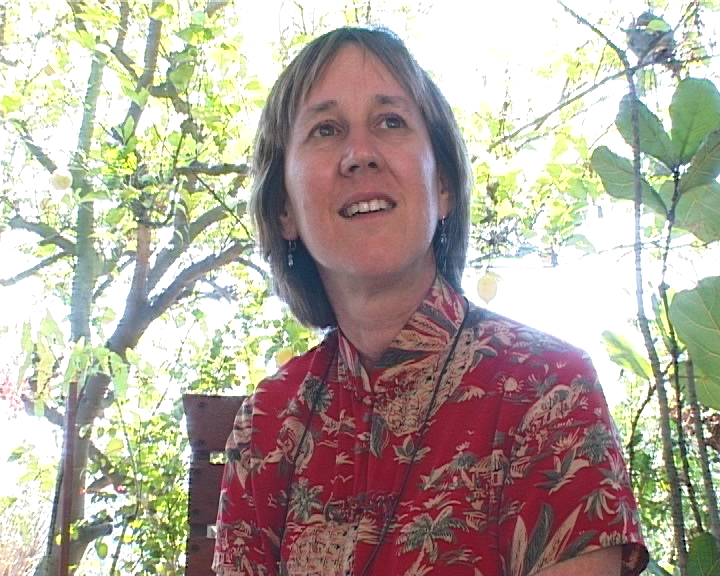
Conversation with Karen Schwenkmeyer at Nancy Buchanan's house, Los Angeles, 2002
Kapitler
Beskrivelse
In this conversation, Karen Schwenkmeyer reflects on M.A.M.A., a feminist art collective she co-founded in the late 1990s with Lisa Mann. The group emerged from a shared sense of isolation among women artists who had recently become mothers: “We were feeling very isolated… and trying to figure out this new transformation of our lives. But also feeling that in being a mother, in this culture, it’s not possible to be an artist.”
M.A.M.A.’s early projects were driven by a spirit of civil disobedience and focused on breastfeeding. One installation took place in a former jail, transformed into a white room with a nursing station, where “milk” flowed from the plumbing and the sound of a crying baby immersed the viewer in the experience of infant care. Another piece explored the legal and cultural tensions around breastfeeding in public, which had only recently been legalized in California. The group filmed women breastfeeding on a public bench and displayed the footage in the same location. Police temporarily confiscated the work, considering it obscene. Schwenkmeyer reflects on the irony of this censorship in contrast to the hyper-sexualized yet socially accepted images of women’s bodies in advertising.
M.A.M.A.’s work continued to evolve. “We did a piece that was shown in a movie theater,[…] dealing with the whole idea of mothers being blamed for all the ills of society as well as for not raising children correctly.” Another installation, Bad Moms, invited participants to write down things their mothers had told them, examining the intergenerational and psychological complexities of motherhood. Milkstained was a webcast performance exploring the intimate and often invisible aspects of maternal labor: “So really an untouched area to explore, and, in a sense, too, we felt there werent really words to describe the whole process of being a mother.”
The ongoing stigma of motherhood in the art world remains a concern. Schwenkmeyer cites Mary Kelly as a rare example of an artist who addressed motherhood in serious conceptual work. Though M.A.M.A. is no longer active, Schwenkmeyer continues to create work on the subject, documenting domestic life and the repetitive, exhausting, invisible nature of maternal labor: “about how children do kind of disrupt the order of the world… and this is what you do, clean up the very same thing every day.”